



30 Sep Reformer vs. Mat Pilates: What’s the Difference and Which to Choose
Understanding the Two Main Approaches to Pilates
Pilates has surged in popularity for its emphasis on core strength, flexibility, and overall movement quality. At Physical Equilibrium, many clients ask about the distinctions between the two most common formats: Reformer and Mat Pilates. Each method offers unique benefits and caters to different goals, experience levels, and physical needs. If you are considering integrating Pilates into your wellness or rehabilitation journey in Midtown Manhattan or the greater New York City area, it’s important to understand which approach aligns best with your objectives.
Key Differences Between Reformer and Mat Pilates
Both Reformer and Mat Pilates are rooted in the same principles—control, alignment, breath, precision, and flow. However, the equipment, experience, and outcomes can vary significantly.
Equipment Involved
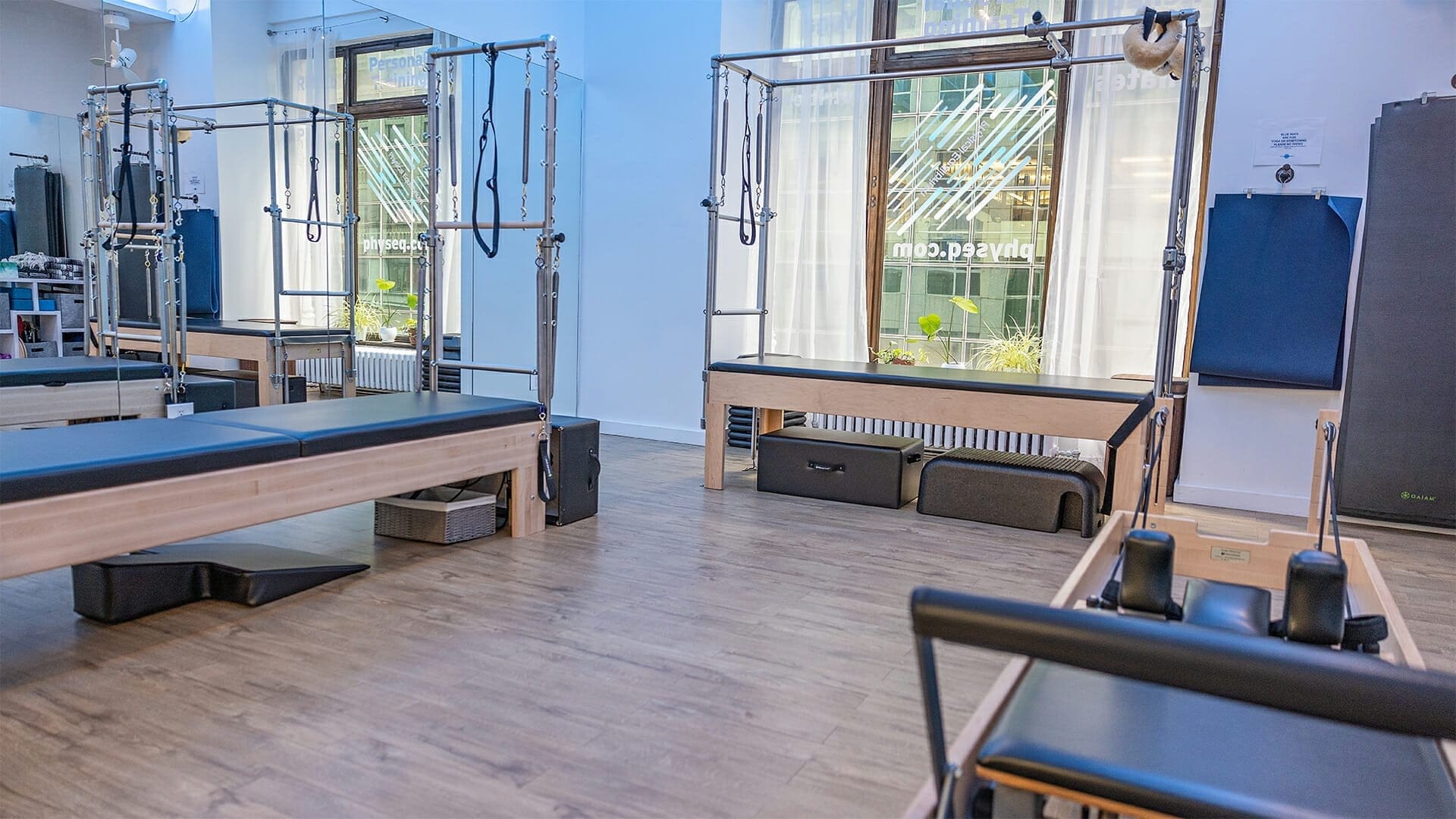
- Reformer Pilates: Utilizes a specialized machine called a reformer, featuring a sliding carriage, adjustable springs, pulleys, and straps. This apparatus provides variable resistance and support, enabling a diverse range of exercises targeting strength, flexibility, and stability.
- Mat Pilates: Performed on the floor with minimal equipment—typically just a mat. Occasionally, small props like rings, resistance bands, or light weights are incorporated, but body weight remains the primary source of resistance.
Level of Challenge and Support
- Reformer Pilates: The adjustable springs allow for customizable resistance, making it accessible for beginners seeking support and for advanced clients looking to increase intensity. The reformer can assist with proper alignment and accommodate various physical limitations.
- Mat Pilates: Relies almost entirely on body weight, requiring greater core engagement and control. It can be more challenging for those with limited mobility or specific injuries, as there is less external support.
Exercise Variety and Progression
- Reformer Pilates: Offers a wide spectrum of exercises, including movements not possible on a mat. The reformer’s design allows for creative progressions and regressions, supporting recovery, strength building, and performance enhancement.
- Mat Pilates: Focuses on foundational exercises that develop deep core strength, posture, and flexibility. While mat classes can be highly effective, the variation in exercises may be more limited compared to the reformer.
Who Benefits Most From Each Approach?
The optimal Pilates method depends on your individual goals, experience, and physical condition. At Physical Equilibrium, our clinicians and movement specialists help clients identify which approach best fits their needs—especially in the context of integrated rehabilitation, injury prevention, and performance support.
Reformer Pilates: Ideal For
- Individuals seeking customized resistance and support—ideal for injury recovery, post-surgical care, or those new to exercise.
- Athletes or active adults pursuing advanced strength, flexibility, and performance training with progressive resistance.
- Clients with mobility limitations or joint pain, as the reformer can provide assistance and reduce strain during movement.
- Anyone looking for maximum exercise variety and targeted movement refinement.
Mat Pilates: Ideal For
- Those interested in building foundational core strength and improving posture with minimal equipment.
- Clients who want a portable, accessible practice they can continue at home or while traveling.
- Individuals with prior Pilates experience and strong body awareness, seeking to deepen their control and precision.
- Anyone who prefers group classes or a lower-cost entry point to Pilates.
How Physical Equilibrium Supports Your Pilates Journey
Located in the DuMont Building at 515 Madison Ave, 5th Floor in Midtown Manhattan, Physical Equilibrium offers a comprehensive suite of services designed to help clients enhance movement quality, recover from injury, and optimize performance. Our expert clinicians integrate Pilates-informed exercise strategies into individualized programs for:
- Orthopedic and sports rehabilitation
- Post-surgical recovery
- Pelvic floor function and core stability
- Hand and upper extremity conditions
- Chronic pain management and mobility improvement
- Functional strength and movement assessments
Our approach emphasizes one-on-one, evidence-informed care, ensuring each client receives a personalized experience that aligns with their goals—whether returning to sport, navigating postpartum recovery, or enhancing daily movement.
Choosing the Right Pilates Method for You
When considering Pilates as part of your wellness or rehabilitation strategy in Manhattan or the NYC metro area, reflect on:
- Your current physical condition and any injury or pain considerations
- Your movement and performance goals
- Preferred exercise environment (equipment-based vs. minimalist)
- Access to professional instruction and supervision
Consulting with a skilled movement specialist at Physical Equilibrium can help you select the approach—Reformer or Mat Pilates—that best fits your needs and ensures you achieve optimal results safely and effectively.
Experience Expert Movement Care in Midtown Manhattan
Ready to elevate your movement, accelerate your recovery, or prevent future injuries? Physical Equilibrium delivers integrated therapy and wellness services for residents, professionals, and athletes across Midtown East, the Upper East Side, Sutton Place, Murray Hill, and beyond. Our team is committed to providing the highest standard of care in a supportive, accessible Manhattan setting.
Visit us in the DuMont Building at 515 Madison Ave, 5th Floor, New York, NY 10022, or connect with us to learn how our individualized approach can help you achieve your goals.
Contact Physical Equilibrium:
- Address: DuMont Building, 515 Madison Ave, 5th Floor, New York, NY 10022
- Phone: +1 (917) 873 6100
- Website: https://physeq.com/
Contact us today to schedule your personalized consultation →